Nanosecond
A running app that measures how much time relativity saves you on every run.
- Part no.
- A93-09
- Status
- prototype
- Platform
- iOS
- Year
- 2026
- Stack
- SwiftSwiftUISwiftDataCloudKitStrava API
Every running app shows the same numbers. Nobody gives you something new to be proud of.
A playful hook built on real physics. Your clock really does tick slower when you run, and Nanosecond turns that into a stat you can share, compare and race.
A novelty with a social hook: free to try, with a paid "Field" for leaderboards and twin challenges.
- Downloads (assumption)20,000
- ×Upgrade for the Field3%
- =Payers600
- ×Price after Apple≈ €2.50 one-off
- =Revenue≈ €1,500
- Sync
- CloudKit, free tier
- Strava upload
- free API
CloudKit costs scale with Apple, not with me. Its real value is shareability: "I gained 0.3 picoseconds this morning" is a post that spreads itself.
Not a business. It’s a brilliant hook, and could be a feature or a marketing stunt for a bigger running app.
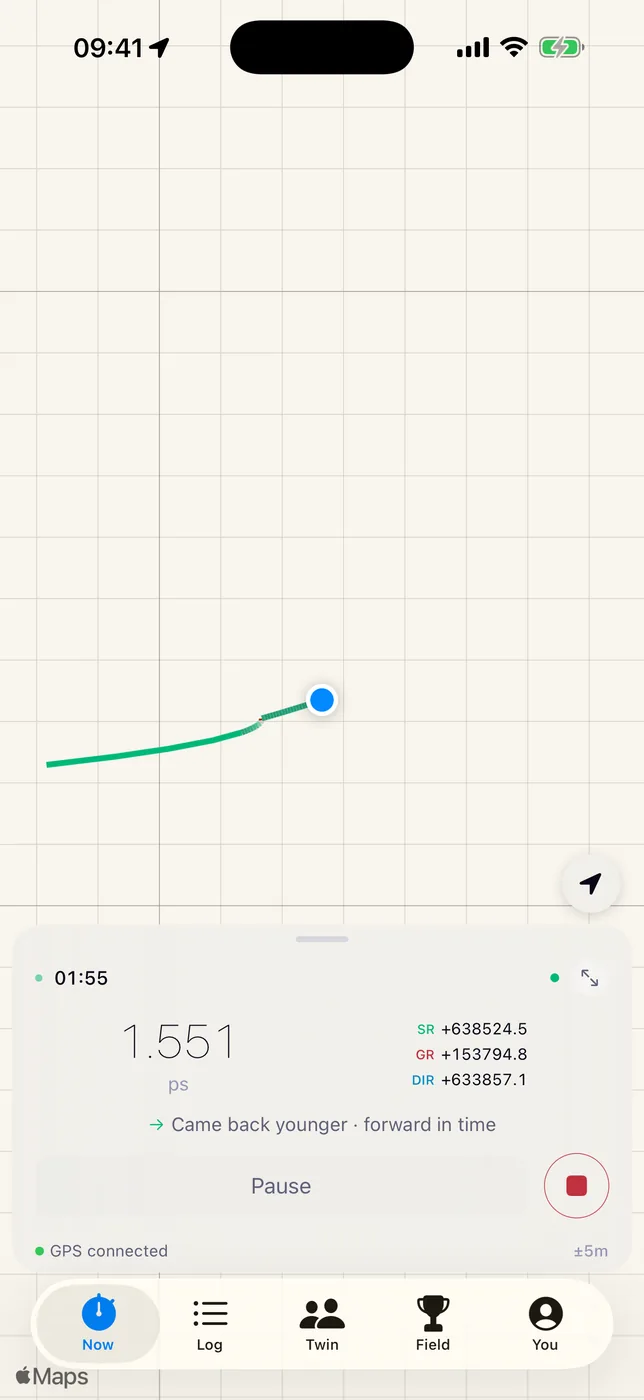
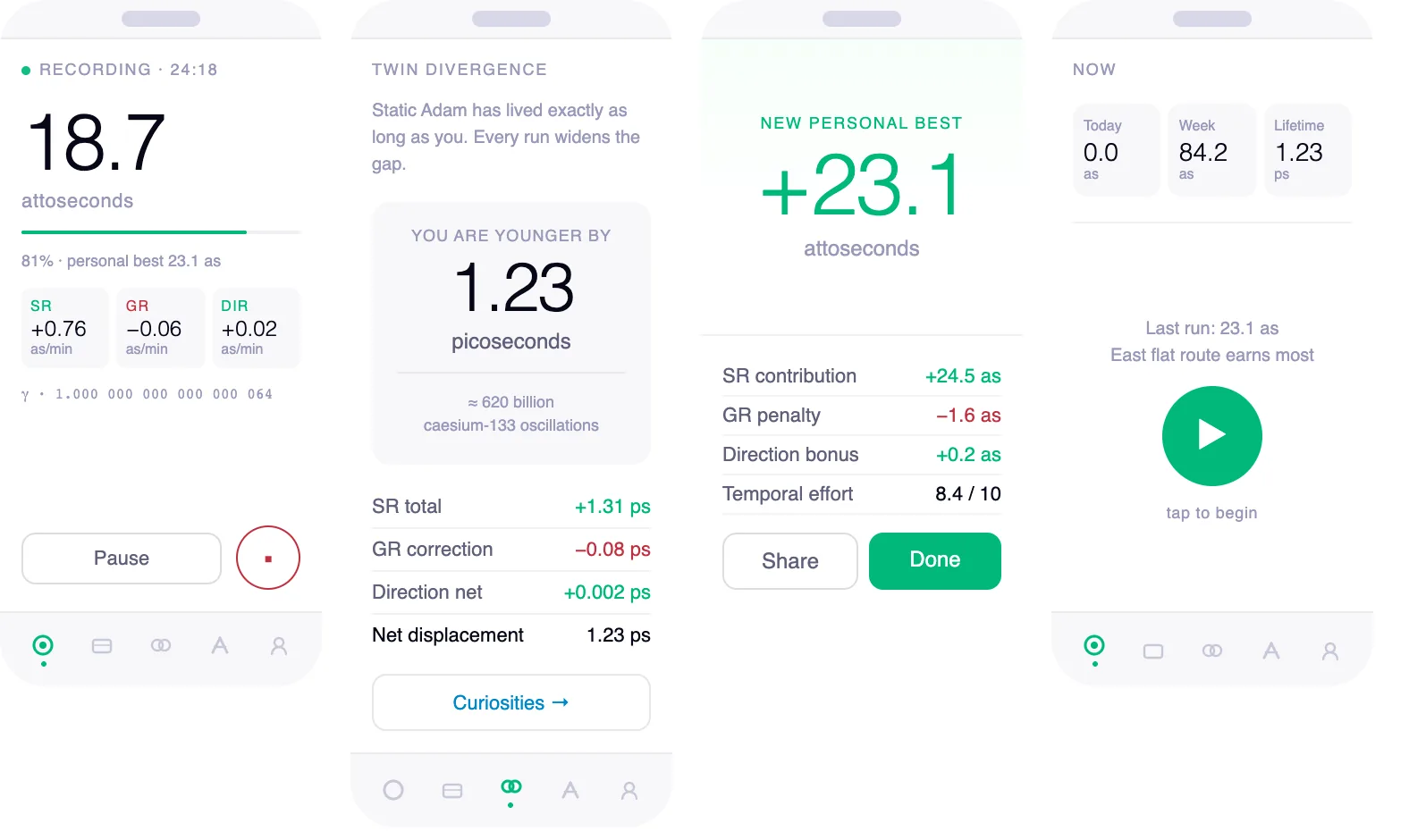
- 01VelocityGPS speed in an inertial frame, corrected for Earth’s rotation.
- 02Lorentz factorγ = 1/√(1−v²/c²), integrated over the whole run.
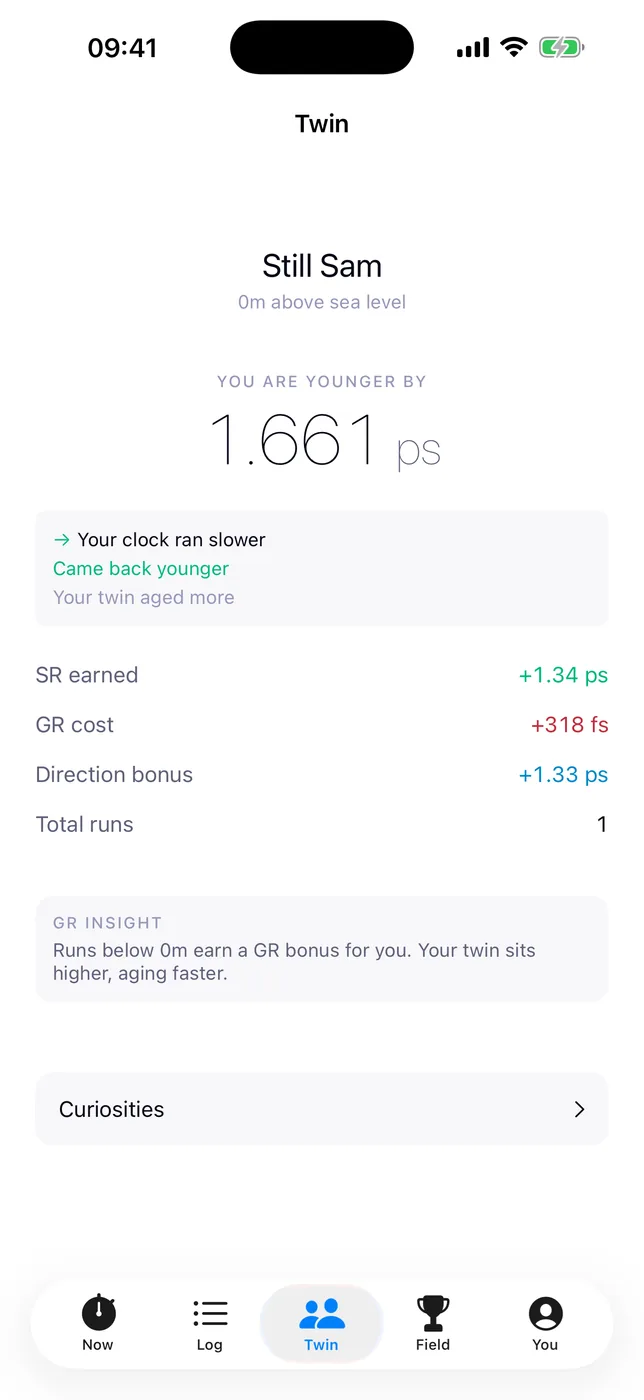
- 03Proper timeThe gap between your clock and a clock left at home.
- 04FieldA twin-divergence view and leaderboard, synced with CloudKit.
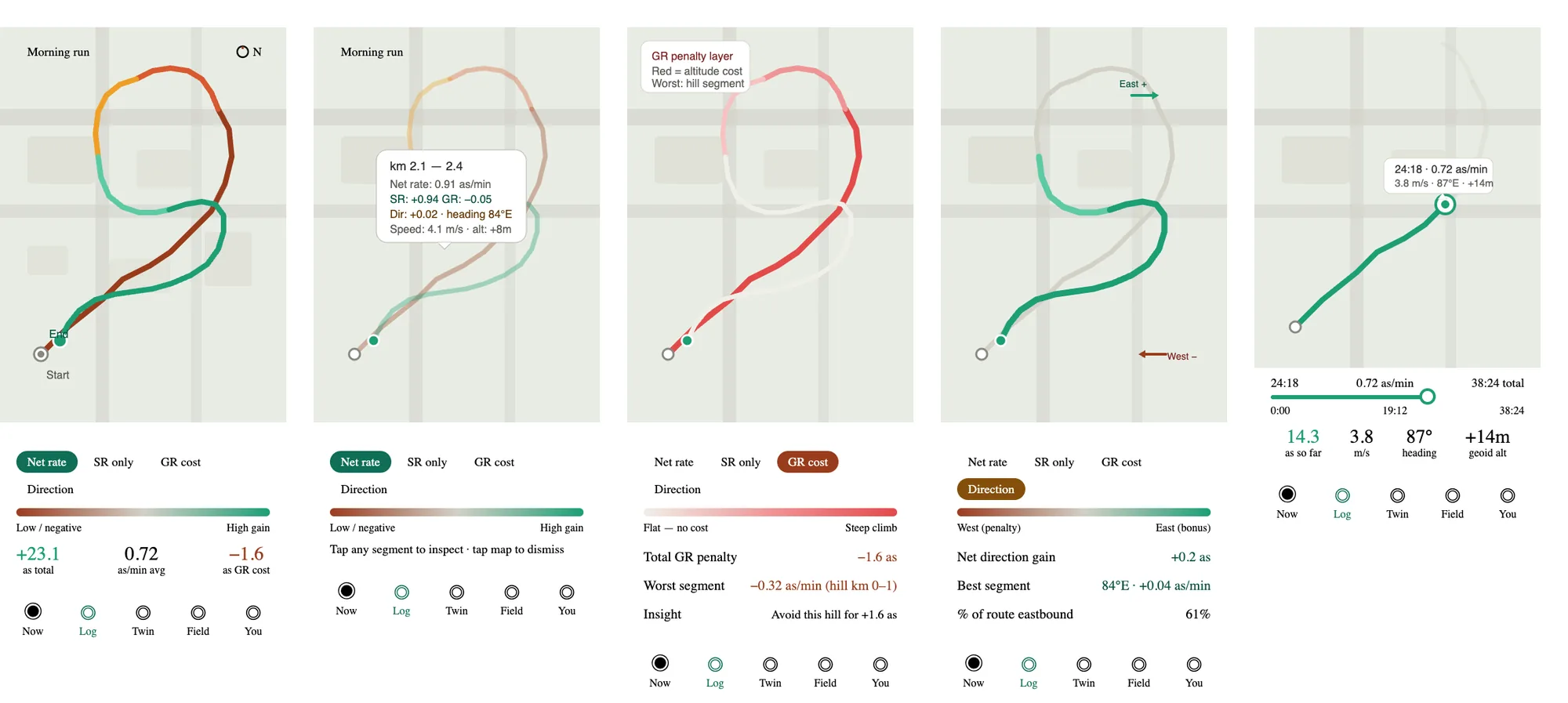
Physics you can check
The project doc derives the Lorentz factor step by step and sanity-checks the result: about 0.32 picoseconds saved per hour of running.
Strava-ready
The upload integration is designed around a backend job queue, so it survives flaky networks.